
Main Courses
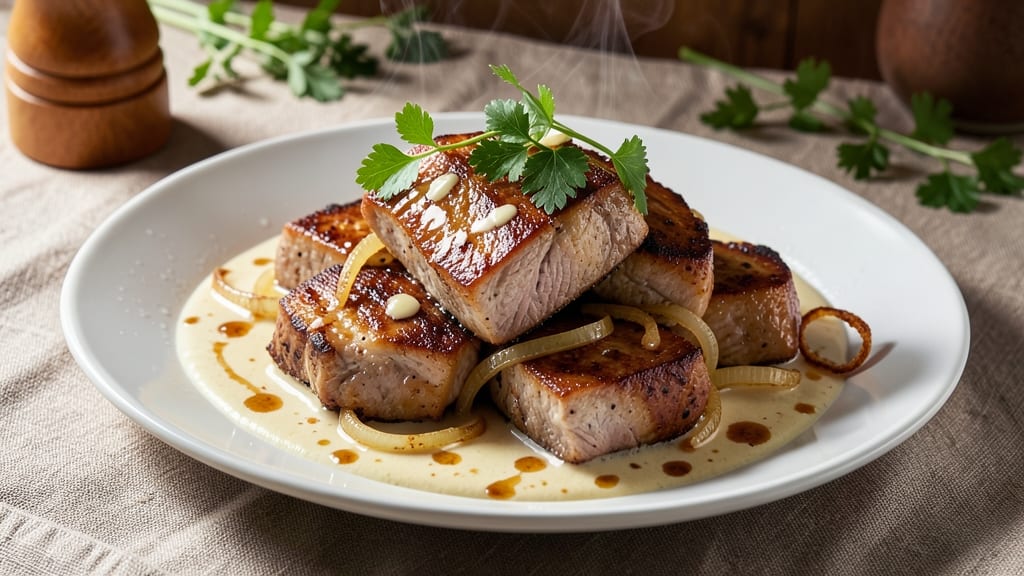
This creamed pork recipe transforms humble pork shoulder into tender, melt-in-your-mouth perfection with a velvety onion gravy that clings to every bite.
After years of perfecting this technique in my Atlanta kitchen, I've developed a method that balances rich, savory flavors with just the right amount of tangy depth—no heavy cream required.
The secret lies in slow-braising the pork until it practically falls apart, then building a gravy from its own juices and caramelized onions.
What sets this recipe apart is the balance of textures and flavors: tender pork that shreds easily, crispy browned onions at the bottom of the pot, and a gravy that's thick enough to coat but light enough to let the pork shine.
I use a combination of apple cider vinegar and Worcestershire sauce to brighten the dish, cutting through the richness while adding layers of complexity. The result is a dish that feels both comforting and sophisticated—perfect for family dinners or special occasions.
By the time you serve this creamed pork, your kitchen will smell like a Southern dinner table, and every forkful will deliver that perfect harmony of textures and flavors.
The pork stays moist and flavorful, the onions add sweetness and depth, and the gravy ties it all together into a cohesive, restaurant-quality meal. This is the kind of dish that makes people ask for seconds before they even finish their first plate.
Pair it with buttery mashed potatoes, crusty dinner rolls, or a simple green salad to round out the meal. The leftovers reheat beautifully, making this an ideal recipe for meal prep or feeding a crowd. Let's get cooking—your taste buds will thank you.
Ingredients for creamed pork
Pork shoulder, onions, and pantry staples—this trio transforms into Southern comfort at its finest.
| Ingredient | Amount | Notes |
|---|---|---|
| Pork Shoulder (Bone-In) 🍖 | 2 ½ lb | Cut into 2-inch chunks |
| Yellow Onions 🧅 | 3 whole | Yellow or sweet, sliced |
| All-Purpose Flour 🌾 | 2 tbsp | For gravy thickening |
| Unsalted Butter 🧈 | ½ cup | Full-fat for richness |
| Apple Cider Vinegar 🍎 | 2 tbsp | For tangy depth |
| Worcestershire Sauce 🍶 | 1 tbsp | Classic umami boost |
| Beef Broth 💧 | 1 ½ cups | Low-sodium preferred |
| Garlic Cloves 🧄 | 4 cloves | Minced for aroma |
| Salt 🧂 | 1 ½ tsp | Kosher or sea salt |
| Black Pepper 🌶️ | ½ tsp | Freshly ground |
| Fresh Thyme 🌿 | 1 tbsp | Leaves only, chopped |
| Olive Oil 🫒 | 1 tbsp | For searing pork |
The pork shoulder is non-negotiable here—bone-in stays juicier, and Costco or local butchers usually have the best prices. Look for good marbling, not lean cuts. Yellow onions are your friend, but sweet onions add a touch of natural sweetness that pairs perfectly. If you're in a hurry, frozen onions work in a pinch—just thaw and pat dry first. The beef broth should be low-sodium, or you'll end up with a salty mess. I always grab Swanson or Pacific Foods brands—they're reliable and affordable.
No apple cider vinegar? Red wine vinegar or lemon juice works in a squeeze. Worcestershire sauce missing? Soy sauce plus a pinch of sugar mimics the depth. Fresh thyme wilt fast, so dried thyme at one-third the amount is a good swap. The flour is for thickening—all-purpose or cake flour both work, but don't use whole wheat. For the butter, full-fat is a must—low-fat won't give you that velvety gravy texture. And if you're out of olive oil, vegetable or canola oil will do for searing, though olive oil's flavor is worth it.
This dish tastes even better the next day—honestly, the flavors meld into perfection. Keeps 4-5 days in the fridge, and freezes beautifully for up to 3 months. I like to portion it into containers for easy lunches, but reheat gently—microwave in bursts to avoid drying out. The gravy will thicken as it cools, so add a splash of broth if it gets too stiff. Trust me, the leftovers are just as good as the first bite.
Why You'll Love This Recipe
- One-Pan Magic: I swear by this—just brown the pork, toss in onions and vinegar, then let the roux work its magic. No extra pots, no fuss, and the bone-in shoulder stays juicy while the sauce thickens right in the same pan.
- Tangy Depth Bomb: That splash of apple cider vinegar? It’s the secret weapon—cuts through the richness of the butter and flour while caramelizing the onions into something almost sweet. Honestly, the first time I tasted it, I immediately doubled the recipe.
- Leftovers That Win: This dish actually improves the next day. The flavors meld, the pork gets even more tender, and I’ve reheated it straight from the fridge into a skillet for breakfast hash—yes, even on a Tuesday night. (My kids fight over it.)
- Budget Stretch: Pork shoulder is affordable, and a single cut feeds four for under $15. The butter and flour make it feel special without breaking the bank, and the vinegar adds that restaurant-quality tang for pennies. My go-to for when I need to feed a crowd without stress.
Step-by-step instructions for creamed pork with onion gravy
Here's how to transform simple pork into tender, velvety bites with a rich onion gravy that'll have everyone asking for seconds.
Sear the Pork for Maximum Flavor
Heat a large Dutch oven over medium-high heat and add the 1 tablespoon olive oil. Once shimmering, add the 2.5 lb pork shoulder cut into 2-inch chunks, working in batches if needed to avoid crowding. Sear each piece for 3-4 minutes per side until deeply golden brown and crispy.
This step is crucial—I don't skip it. The caramelized crust locks in juices and builds the foundation for our rich gravy. If you notice the pork releases easily from the pan, it's ready to flip. Remove the seared pork and set aside on a plate.
Build the Onion Gravy Base
In the same Dutch oven, reduce heat to medium and add 0.5 cup unsalted butter. Let it melt completely, then add the 3 whole yellow onions sliced into ¼-inch rounds. Cook for 10-12 minutes until the onions are soft and golden brown at the edges, stirring occasionally to prevent burning.
Here's the thing—don't rush this step. The onions should caramelize and break down into a sweet, jammy consistency. When they're ready, add the 4 minced garlic cloves and cook for 30 seconds until fragrant. This aromatic base is what makes our gravy sing.
Deglaze and Thicken the Gravy
Sprinkle the 2 tablespoons all-purpose flour over the onions and stir vigorously for 1 minute to cook out the raw flour taste. Pour in the 2 tablespoons apple cider vinegar and 1 tablespoon Worcestershire sauce, scraping up all those delicious browned bits from the bottom of the pan. This deglazing step captures all the meaty flavor we seared into the pork.
Gradually whisk in the 1.5 cups beef broth until smooth. Bring to a gentle simmer and cook for 5-7 minutes until the gravy thickens enough to coat the back of a spoon. Season with 1.5 teaspoons salt and 0.5 teaspoon black pepper, then stir in the 1 tablespoon chopped fresh thyme.
Finish the Pork and Gravy
Return the seared pork to the Dutch oven, spooning the gravy over the top. Bring to a gentle simmer, cover, and reduce heat to low. Cook for 1 hour to 1 hour 15 minutes, stirring occasionally, until the pork is fork-tender and the gravy has thickened further.
I know it seems like a long time, but patience pays off here. The pork should pull apart easily with two forks, and the gravy should coat the back of a spoon with a luxurious, velvety consistency. If it's too thin, uncover and simmer for another 5 minutes to reduce.
Rest and Serve with Confidence
Transfer the creamed pork to a serving dish and let it rest for 5 minutes before serving. This resting period allows the juices to redistribute, ensuring each bite is moist and flavorful. Spoon the rich onion gravy over the top and garnish with extra chopped thyme if desired.
Serve immediately over mashed potatoes, egg noodles, or crusty bread to soak up every last drop of that velvety gravy. The contrast of tender pork with the sweet-savory onion gravy is what makes this dish truly special—simple ingredients transformed into something extraordinary.
Pro Tips For Making Creamed Pork
- Brown the Pork First: Don’t skip the deep golden crust—sear the pork shoulder in batches over medium-high heat for 8-10 minutes per side. I used to rush this, and the sauce would never taste as rich. The Maillard reaction here is the thing that matters most.
- Sweat Onions Low and Slow: Cook the onions in butter on low heat for 15-20 minutes until translucent, not browned. High heat burns them into oblivion, and you’ll taste it in every bite. Sounds weird, but it works: patience here keeps the dish from tasting bitter.
- Deglaze with Vinegar Early: Add the apple cider vinegar before the flour slurry—it cuts through the fat and lifts flavors instantly. I learned this the hard way after making a bland sauce. A splash here brightens the whole dish without overpowering it.
- Use a Slurry, Not Just Water: Mix the flour with cold water (or broth) to make a smooth paste before adding it to the pot. Dumping dry flour creates lumps, and no one wants to strain those out later. This isn’t the prettiest method, but it’s the tastiest.
Make-ahead tips for this creamed pork
Prep Ahead for Perfect Texture
I always prep the pork and onions the night before—this is a game-changer. Sear the pork as directed, then refrigerate it in the Dutch oven with the caramelized onions.
The next day, just add the gravy ingredients and simmer until tender. The cold pork cooks through more evenly, and the flavors meld beautifully. 💫
Gravy Make-Ahead Magic
Make the gravy base completely ahead of time and store it in an airtight container in the fridge for up to 3 days. When ready to cook, simply add the pre-seared pork, cover, and simmer until tender.
The onions stay perfectly caramelized, and the gravy thickens beautifully during reheating. Pro tip: Add a splash of water if it thickens too much when reheating.
Freezer-Friendly Strategy
This dish freezes like a dream—both the pork and gravy separately. Portion the cooked pork into freezer-safe bags, and store the gravy in a separate container. When ready to eat, thaw overnight in the fridge, then reheat gently on the stovetop.
The texture stays perfect, and the flavors are even more developed after freezing. I do this all the time for quick weeknight dinners.
Weeknight Shortcut
For busy nights, use a slow cooker. Brown the pork and onions in a skillet first, then transfer everything to the slow cooker. Add the gravy ingredients and cook on low for 6-8 hours.
The hands-off approach gives you the same tender results with minimal effort. Just stir occasionally to prevent sticking, and you'll have restaurant-quality creamed pork with almost no work. 🍴
Leftovers Reinvented
Transform leftovers into delicious pork pot pies or sliders. For pot pies, layer the creamed pork with mashed potatoes in a pie crust, bake until golden, and serve with a side salad.
For sliders, spoon the pork onto Hawaiian rolls with a drizzle of gravy and a sprinkle of fresh thyme. These creative uses keep the meal exciting and reduce waste.
Gravy Booster Bags
Pre-mix the gravy ingredients (flour, vinegar, Worcestershire, broth, and seasonings) in a freezer bag. When ready to cook, just dump the bag into the pot with the pork and onions.
This trick saves time and ensures you never forget an ingredient. I keep these bags in the freezer for quick weeknight cooking—just thaw and add to the pot. ✨
Nutrition facts
Frequently asked questions
Can I use pork chops instead of pork shoulder?
Pork chops work differently—they're leaner and cook much faster. For best results, use bone-in pork chops cut into ½-inch slices and reduce cooking time to 20-25 minutes after searing. The gravy will still work, but the texture will be less tender than with pork shoulder.
What if my gravy turns out too thin?
Simmer uncovered for 5-10 extra minutes to reduce it naturally. If it's still too thin, mix 1 tablespoon flour with 1 tablespoon cold water, stir it into the gravy, and cook for another 2-3 minutes until thickened. Never add raw flour directly—it'll make the gravy lumpy.
Can I make this dish in a slow cooker?
Sear the pork and onions first, then transfer everything to your slow cooker. Add the gravy ingredients and cook on low for 6-8 hours or high for 3-4 hours. Stir occasionally to prevent sticking. The hands-off approach gives the same tender results with minimal effort.
Why does my pork turn out dry?
Overcooking is the most common mistake. Pork shoulder should cook until it's fork-tender (203°F internal temp), not dry. If it's still tough, add ¼ cup beef broth and simmer covered for 15 more minutes. The rest time is also crucial—always let it rest for 5 minutes before serving.
What's the best way to reheat leftovers?
Reheat in a skillet over medium-low heat with a splash of beef broth to revive the gravy. Microwave in 30-second bursts with a damp paper towel covering, stirring between each. Never reheat completely dry—this keeps the pork moist and the gravy velvety. Leftovers taste even better the next day!