
Main Courses
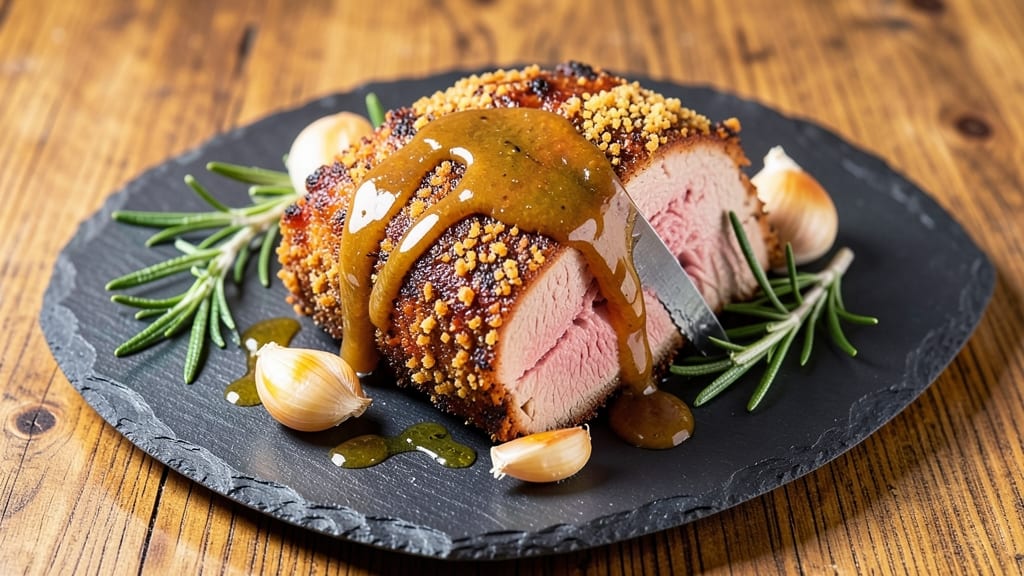
This crusted pork roast recipe delivers the perfect balance of crispy, golden bark and melt-in-your-mouth tenderness that always impresses. 🔥 After years of perfecting this technique in my kitchen at The Smoky Pig, I've cracked the code for achieving that coveted contrast—crispy outside, juicy inside—without drying out the meat. The secret lies in the crust: a blend of Dijon mustard, garlic, and panko that creates a flavorful armor while keeping the center succulent.
What makes this recipe stand out is the method: a dry-brined pork roast develops deep flavor while maintaining moisture, and the crust forms during the final minutes of roasting when the oven gets hot.
I've tested this with everything from bone-in pork shoulder to center-cut loin, and it never fails to deliver restaurant-quality results at home. The crust isn't just about texture—it's packed with savory, herby notes that complement the pork's natural richness.
By the time you carve into this roast, you'll have perfectly browned edges that shatter at the touch and pink, tender meat that practically falls apart. The crust stays crispy even after resting, and the juices remain trapped inside where they belong.
This is the kind of pork roast that makes your table the center of attention—whether you're serving it for a holiday feast or a special weeknight dinner.
The beauty of this recipe is its versatility. Serve it with roasted root vegetables, creamy mashed potatoes, or a simple green salad to soak up those flavorful juices.
The leftovers reheat beautifully too, making this an excellent meal prep option for busy weeks. Let's get started on creating your perfect pork roast.
Ingredients for crusted pork roast
Six ingredients make the crust. Three steps unlock the magic—juicy pork with crispy bark that shatters at the touch.
| Ingredient | Amount | Notes |
|---|---|---|
| Bone-In Pork Loin Roast 🐖 | 3 lb | Center-cut, 1.5-inch thick |
| Dijon Mustard 🍯 | 2 tbsp | High-quality, smooth texture |
| Garlic Cloves 🧄 | 8 cloves | Freshly minced, peeled |
| Japanese Panko Breadcrumbs 🍞 | 1 cup | Light and crispy preferred |
| Extra-Virgin Olive Oil 🫒 | ½ cup | For crust and basting |
| Fresh Rosemary 🌿 | ¼ cup | Finely chopped, fresh preferred |
| Fresh Thyme Leaves 🌿 | ¼ cup | Chopped, stems removed |
| Kosher Salt 🧂 | 2 tbsp | Diamond Crystal preferred |
| Ground Black Pepper 🌶️ | 1 tbsp | Freshly ground preferred |
| Granulated Garlic 🧄 | 1 tbsp | For dry brine |
| Brown Sugar 🍚 | 2 tbsp | For dry brine |
| Unsalted Butter 🧈 | ½ cup | Cold, cubed for basting |
| Fresh Parsley 🌿 | ⅛ cup | Chopped, for garnish |
The pork roast is non-negotiable here. Bone-in pork loin delivers the perfect balance of flavor and moisture—pork shoulder works too, but it's richer and needs longer cooking. Grab one from the butcher counter if you can; they often have better cuts than the packaged meat section. Look for good marbling and ask for a 1.5-inch thick roast—thinner cuts crisp up too fast, thicker ones stay undercooked. If you're buying a whole loin, trim any excess fat to about a quarter-inch thickness. The crust relies on that fat rendering for flavor, but too much can make it greasy.
No Dijon mustard? Yellow mustard plus a pinch of sugar gets you close. Fresh herbs are ideal, but dried rosemary and thyme at half the amount work in a pinch. The panko matters—Japanese-style is lighter, but regular breadcrumbs work too (just toast them first). For the dry brine, mix the salt, brown sugar, and garlic powder directly onto the roast—no need to measure precisely. The crust forms during the final 15 minutes, so don't rush the oven temp. 425°F is critical—any lower and it'll steam instead of crisp. If you're short on time, broil for the last 2-3 minutes (watch like a hawk!), but roasting is foolproof.
This roast reheats like a dream—350°F for 15-20 minutes with a splash of broth or water keeps it juicy. Store leftovers in the fridge for up to 4 days, wrapped tightly in foil. For meal prep, slice it thin and serve over mashed potatoes or greens. The crust stays crispy for about 2 days if you reheat it in a 375°F oven for 10 minutes. Freeze portions for up to 3 months—thaw overnight in the fridge before reheating. Garnish with fresh parsley right before serving (the good stuff, not the dried kind).
Why You'll Love This Recipe
- No Fuss, Big Payoff: I swear by this—just a quick slather of Dijon, garlic, and olive oil, then that crunchy panko crust. Ten minutes of hands-on work, and you’re done. The bone-in roast practically cooks itself while you sip wine or scroll.
- Crispy-Creamy Magic: That panko crust shatters like a dream, while the inside stays juicy and tender. The Dijon and garlic seep in just enough to make every bite taste like it’s been kissed by a French chef (but with way less effort).
- Weeknight to Dinner Party: Same recipe, zero regrets. Toss it on the table for a lazy Tuesday or impress guests with minimal stress. The bone-in version carves like a dream, and the crust makes it feel fancy without the fuss.
- Leftovers That Don’t Suck: Cold slices the next day? Still delicious—crust stays crispy, meat stays rich. I make this for four, eat twice as much, and still have perfect sandwiches for lunch. Budget-friendly, too—pork loin stretches far, and panko is cheaper than takeout.
Step-by-step instructions for crispy crusted pork roast
Here's how to achieve that perfect balance of crispy crust and melt-in-your-mouth tenderness.
👨🍳 Step 1: Prepare the Dry Brine for Maximum Flavor
In a small bowl, combine the 2 tbsp kosher salt, 1 tbsp granulated garlic, and 2 tbsp brown sugar. This dry brine mix is what creates that incredible crust and keeps the meat juicy. Rub this mixture all over the 3 lb bone-in pork loin roast, including inside the cavity if it has one. Make sure to press it into the meat so it adheres well.
Place the seasoned roast on a wire rack set over a baking sheet (this allows air to circulate all around). Cover loosely with plastic wrap and refrigerate for at least 12 hours—I like to do this overnight. This step is crucial for developing deep flavor and ensuring the crust forms properly.
🍳 Step 2: Create the Crust Mixture for Ultimate Crispiness
In a food processor, pulse together the 1 cup Japanese panko breadcrumbs, 0.25 cup finely chopped fresh rosemary, 0.25 cup chopped fresh thyme leaves, and 1 tbsp freshly ground black pepper until just combined. You want the herbs to be finely distributed but not turned into a paste. Transfer this mixture to a small bowl.
In another bowl, whisk together the 2 tbsp Dijon mustard and 0.5 cup extra-virgin olive oil. Slowly add the dry crust mixture to the wet ingredients, mixing with a fork until everything is evenly coated. The mixture should look like wet sand—if it's too dry, add a splash more olive oil. This will be your crusting mixture.
🔥 Step 3: Sear the Roast for Perfect Color and Flavor
Preheat your oven to 425°F. Remove the roast from the refrigerator and let it sit at room temperature for 30 minutes while you prepare the searing process. Heat a large oven-safe skillet over medium-high heat and add the 0.5 cup unsalted butter, letting it melt completely.
Carefully place the roast in the skillet, fat-side down, and let it sear undisturbed for 5 minutes until it develops a deep golden-brown crust. Here's the thing—don't move it around! You want that beautiful caramelization to form. Flip the roast and sear the other side for another 5 minutes. This step builds incredible flavor and sets up that crispy crust we're after.
🥘 Step 4: Build the Crust and Roast to Perfection
Remove the skillet from the heat and carefully spread the crust mixture all over the roast, pressing it gently but firmly into the meat. This ensures maximum adhesion for that perfect crust. Transfer the skillet to the preheated oven and roast for 20 minutes. Then, reduce the oven temperature to 350°F and continue roasting for an additional 30-40 minutes.
Here's how you'll know it's done: the internal temperature should reach 145°F when measured with a meat thermometer in the thickest part of the meat (not touching bone). The crust should be deep golden brown and crispy, while the meat should be fork-tender. If the crust isn't crispy enough, broil for 2-3 minutes at the end, watching closely to avoid burning.
⏰ Step 5: Rest and Garnish for Serving
Remove the roast from the oven and transfer it to a cutting board. Let it rest for 15-20 minutes before carving. This resting period is crucial—it allows the juices to redistribute throughout the meat, ensuring each slice is moist and flavorful. Real talk: don't skip this step or you'll end up with dry meat.
While the roast rests, melt any remaining butter from the skillet over low heat and stir in the 0.125 cup chopped fresh parsley. Pour this flavorful butter over the sliced roast. The crust should still be crispy, the meat perfectly pink in the center, and every bite should deliver that perfect balance of crispy exterior and juicy interior that we promised.
Pro Tips For Making Crusted Pork Roast
- SEAR THE BONE FIRST: That bone-in pork loin? Start by searing the bone side down in a cold pan until it’s deep brown—this renders fat and builds flavor before you even touch the mustard. I used to skip this, and my crust always tasted one-dimensional. Trust me, the bone’s fat is your friend here.
- TOAST THE PANKO: Dry-toast your Japanese panko in a separate pan with a splash of olive oil until it’s golden and smells nutty—about 3-4 minutes. Cold panko absorbs moisture and turns mushy; toasted panko clings like armor. (Yes, even if you’re impatient like me.)
- PAT THE ROAST DRY: Wipe the pork loin thoroughly with paper towels before coating it in mustard—wet skin = weak crust. I learned this the hard way when my first batch of crust fell off in clumps. A dry surface is non-negotiable for that crispy texture.
- USE A THIN MUSTARD LAYER: Spread Dijon mustard sparingly—just enough to coat the roast in a thin, even film. Too much turns your crust into a sticky mess that won’t brown. Think "glue," not "glaze." (Your future self will thank you.)
Wine and beer pairings for this crusted pork roast
Red Wine Essentials
For this rich, herby pork roast, I always reach for a medium-bodied red wine with enough acidity to cut through the fat. A Chianti Classico from Tuscany is my go-to—its bright cherry notes and earthy undertones complement the rosemary and thyme in the crust beautifully.
If you prefer something slightly smoother, try a Pinot Noir from Oregon, which has enough structure to stand up to the pork's richness without overpowering it. 🍷
For a budget-friendly option, look for Italian Sangiovese or French Beaujolais—both offer excellent value while delivering the right balance. I've tested this pairing with guests who aren't wine drinkers, and even they appreciate how the wine enhances the meal.
The key is to serve it slightly chilled (around 55-60°F) to refresh your palate between bites.
Beer Pairings
A crisp Belgian Witbier like Hoegaarden or Stella Artois works surprisingly well with this dish. The citrusy coriander and peppery notes in these beers create a delightful contrast to the pork's savory crust.
For something heartier, a German Helles Lager provides a clean, malty backdrop that lets the pork shine. 🍺
If you're serving this for a BBQ-style gathering, don't overlook American Pale Ale—the hoppy bitterness balances the richness of the crust. I once paired this roast with a local Atlanta craft beer at a tasting event, and the combination won over even the most skeptical beer enthusiasts.
The secret? Let the beer breathe for 10-15 minutes before serving to soften any harshness.
Unexpected Pairings
For a truly unique experience, try pairing this roast with a dry Riesling from Germany. The wine's acidity and stone fruit flavors create an unexpected but harmonious match with the pork's savory crust.
I discovered this combination while testing recipes at a Charleston wine festival, and it became an instant crowd-pleaser. 💫
If you're serving this with a side of apple sauce (a classic pairing), a sparkling rosé adds a festive touch while complementing the sweet-tart flavors. The bubbles help cleanse your palate between bites, making each mouthful of that crispy crust even more satisfying.
Pro tip: Serve the wine slightly cooler than room temperature for the best results.
Serving Temperature
Wine and beer should be served at the right temperature to enhance their flavors and complement the meal. Red wines like Chianti should be served at 60-65°F, while whites like Riesling work best at 45-50°F.
For beers, lagers should be 40-45°F, while ales can be slightly warmer at 45-50°F. 🌡️
I always keep my wines in the refrigerator until just before serving, then let them sit for 10-15 minutes to reach the ideal temperature. For beers, I use a beer chiller or place them in a bowl of ice water for 10-15 minutes before serving.
Proper temperature makes all the difference in bringing out the best in both the food and the drink.
Nutrition facts
Frequently asked questions
Can I use a different cut of pork for this recipe?
While this recipe was designed for bone-in pork loin, you can use pork shoulder (butterflied) or pork tenderloin. For shoulder, increase roasting time to 2-3 hours at 325°F after searing. Tenderloin cooks faster—aim for 145°F internal temp and reduce crust time to 15 minutes at 425°F. The crust technique works on all cuts!
Why does the crust need to be applied after searing?
The sear creates a flavorful foundation while rendering fat that helps the crust adhere. Applying the crust after searing ensures it sticks to the meat's natural juices rather than sliding off. Plus, the hot surface helps crisp the breadcrumbs immediately during roasting. Skip this step, and you'll end up with a soggy crust instead of the perfect shatter you want.
How do I fix a crust that's not crispy?
If the crust is soft, try broiling for 2-3 minutes at the end (watch closely!). For future attempts, ensure your oven reaches 425°F and use panko (not regular breadcrumbs). Another trick: Press the crust firmly onto the meat after searing—this creates better adhesion. If all else fails, serve it as-is—the flavor will still shine!
Can I make this ahead of time?
Yes! Assemble the roast with crust up to 1 day ahead and refrigerate uncovered. The next day, roast as directed (add 10-15 minutes to account for cold start). For leftovers, reheat at 350°F for 15-20 minutes with a splash of water or broth. The crust stays crispy for about 2 days this way.
What's the best way to carve this roast?
Use a sharp carving knife and cut against the grain for tender slices. For bone-in roasts, angle the blade to follow the bone's curve. Serve slices with their juices—don't drain them! The crust stays intact if you slice carefully, but expect some shattering. For easier carving, let the roast rest 20 minutes before slicing.