
Main Courses
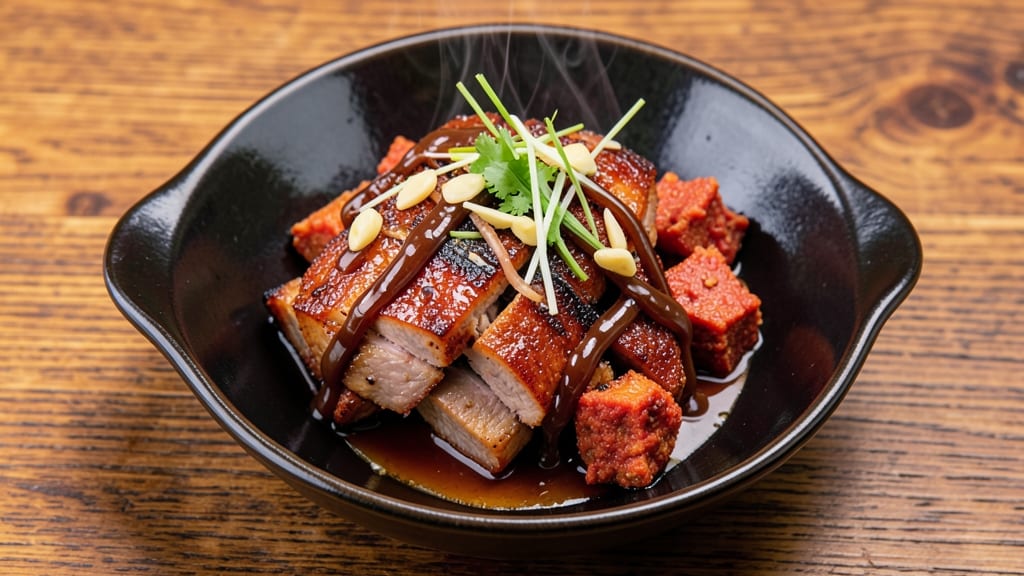
This Chinese red barbecue pork recipe delivers the perfect marriage of deep-fried crunch and aromatic five-spice glaze that's been a staple in my kitchen since I first discovered it at a Cantonese BBQ joint in Guangzhou. The secret lies in the balance of sweet, spicy, and umami flavors that transform simple pork into something unforgettable. I've refined this technique over years of testing—where the pork gets both marinated and fried for maximum flavor penetration and texture.
The process begins with a marinade of fermented bean paste, red fermented tofu, and five-spice powder that infuses the meat with deep, complex flavors. After frying to a golden crisp, the pork is glazed with a sticky-sweet sauce that caramelizes beautifully.
What makes this dish truly special is how the exterior stays crispy while the interior remains tender—something I perfected through careful temperature control and timing.
When served with pickled vegetables or steamed jasmine rice, each bite offers a symphony of textures and flavors: the initial crunch gives way to tender pork, followed by the sweet-spicy glaze. The aroma alone will have everyone at the table anticipating the first bite.
This is the kind of dish that makes you feel like you're dining at a bustling Cantonese BBQ stall, right in your own kitchen.
The beauty of this recipe is its versatility—it works equally well as a main course or party appetizer. I've served it at family gatherings and dinner parties, and it's always the first to disappear.
The key to success is patience in both the marinating and frying stages, but the results are well worth the effort. Let's bring this authentic Chinese BBQ experience to your table.
Ingredients for chinese red barbecue pork
Pantry staples plus a few Asian market treasures—this pork transforms into something unforgettable.
| Ingredient | Amount | Notes |
|---|---|---|
| Pork Shoulder 🐷 | 2 lb | Cut into 1-inch cubes |
| Fermented Bean Paste (Douchi) 🥫 | ½ cup | Store-bought or homemade |
| Red Fermented Tofu 🧀 | ¼ cup | Crumbled, Asian market find |
| Five-Spice Powder 🌶️ | 1 tbsp | Store-bought or homemade blend |
| Soy Sauce 🍶 | ¼ cup | Dark soy for color |
| Honey 🍯 | ¼ cup | For sticky glaze |
| Rice Vinegar 🍶 | ¼ cup | For tangy balance |
| Vegetable Oil 🫒 | 2 cups | For deep-frying |
| Garlic Cloves 🧄 | 6 cloves | Minced for marinade |
| Ginger Root 🌿 | 1 tbsp | Freshly grated |
| Red Chili Flakes 🔥 | 1 tsp | Adjust for spice level |
| Sesame Oil 🌾 | 1 tbsp | For finishing touch |
| Green Onions 🧅 | 4 whole | Sliced for garnish |
| Salt 🧂 | 1 tsp | Kosher or sea salt |
| White Pepper 🌶️ | ½ tsp | Freshly ground |
The pork shoulder is your canvas here—bone-in, skin-on if you can find it, but regular cuts work too. Asian grocery stores are your best bet for fermented bean paste and red fermented tofu (the crumbly kind), but if you can't find them, substitute with miso paste and umeboshi paste for umami depth. Five-spice powder is non-negotiable—look for the whole spices at Penzeys to toast and grind fresh if you're feeling fancy. The dark soy sauce gives that signature red hue, so don't skip it. I always grab extra because it's a game-changer for color and flavor.
No fermented bean paste? Double the soy sauce and add a splash of fish sauce (if not vegetarian). Running low on red fermented tofu? Crumbled tempeh works in a pinch, though it won't be identical. The honey can be swapped for brown sugar if you're avoiding it, but trust me on the sesame oil—toasted sesame oil adds that nutty aroma that makes this dish sing. For the frying, keep the oil at 350°F—any hotter and it'll burn before the pork cooks through. And if you're serving this to a crowd, double the batch—it disappears fast.
Marinated pork keeps 2 days in the fridge, but the flavors deepen overnight. The fried pork stays crispy for about 2 hours at room temp, so reheat in a 350°F oven for 10 minutes if serving later. Store leftovers in an airtight container with a paper towel to absorb moisture. Freezes for 3 months, but the texture gets softer—best enjoyed fresh. Garnish with green onions right before serving, or they'll wilt into oblivion.
Why You'll Love This Recipe
- One-Pot Magic: I swear by this recipe—just toss the pork shoulder in a pot with fermented bean paste and red fermented tofu, then let it slow-cook. No chopping, no fuss, and the flavors meld together like they’ve been simmering all day.
- Umami Bomb: That fermented bean paste? It’s the secret weapon—deep, funky, and irresistible. The five-spice powder adds warmth, while the soy sauce ties it all together into something dangerously addictive.
- Meal Prep MVP: Between us, this is my go-to for lunches all week. The pork stays tender, and the sauce thickens just right—perfect for rice bowls, sandwiches, or even cold cuts. Honestly, I make double batches just to have leftovers.
- Budget-Friendly Feast: Pork shoulder is cheap, and these ingredients stretch far. A single batch feeds four, and the leftovers reheat like a dream. Plus, the red fermented tofu adds texture without breaking the bank. Win-win.
Step-by-step instructions for Chinese red barbecue pork
This method delivers restaurant-style pork with a perfect balance of crispy crunch and sticky-sweet glaze.
Marinate the Pork Shoulder for Maximum Flavor
In a large bowl, combine the 2 lb pork shoulder cut into 1-inch cubes with the 0.5 cup fermented bean paste (Douchi), 0.25 cup red fermented tofu (crumbled), 1 tbsp five-spice powder, 0.25 cup soy sauce, 0.25 cup honey, 0.25 cup rice vinegar, 6 minced garlic cloves, 1 tbsp freshly grated ginger root, and 1 tsp salt. Mix thoroughly until every pork piece is well coated.
Transfer the mixture to a resealable plastic bag and massage gently to ensure even distribution of the marinade. Let it sit at room temperature for 30 minutes to allow the flavors to penetrate, then refrigerate for at least 4 hours (overnight works best). The longer it marinates, the deeper the flavor infusion.
Deep-Fry for Irresistible Crunch
Heat 2 cups vegetable oil in a deep fryer or heavy pot to 350°F. Use a deep-fry thermometer to monitor the temperature—it should stay consistent throughout frying. Working in batches to avoid overcrowding, carefully add the marinated pork cubes, frying for 4-5 minutes until they turn a rich golden brown.
You'll know they're ready when the pork pieces float to the surface and develop a crispy exterior. Remove them with a slotted spoon and drain on paper towels. Don't skip this draining step—excess oil will interfere with the glaze sticking properly later. Keep the fried pork warm in a 200°F oven while you prepare the glaze.
Create the Signature Sticky Glaze
In a clean skillet, combine the 0.25 cup soy sauce, 0.25 cup honey, 0.25 cup rice vinegar, 1 tsp red chili flakes, and 0.5 tsp white pepper over medium heat. Bring to a gentle simmer and cook for 3-4 minutes until the mixture thickens slightly and coats the back of a spoon.
Add the fried pork back to the skillet and toss gently to coat each piece evenly with the glaze. The pork will absorb the sauce quickly, so work efficiently. The glaze should be sticky but not dripping—if it's too thick, add 1-2 teaspoons of water to loosen it. Remove from heat and let it sit for 2 minutes to allow the flavors to meld.
Finish with Sesame Oil and Garnish
Transfer the glazed pork to a serving platter and drizzle with 1 tbsp sesame oil. Toss gently to distribute the oil evenly, which adds a nutty aroma and enhances the overall flavor profile. Garnish with 4 sliced green onions for freshness and visual appeal.
Serve immediately while the pork is still warm and the glaze remains sticky. The contrast between the crispy exterior and tender interior with the sweet-spicy glaze makes this dish truly special. For best results, serve with steamed rice to soak up all that delicious sauce.
Pro Tips For Making Chinese Red Barbecue Pork
- Parboil the Pork First: Skip the raw pork straight into the wok—it’ll turn rubbery. Instead, parboil the shoulder for 10 minutes, then shock it in ice water. This tightens the fibers so they stay juicy when you braise them later, especially with that thick douchi paste clinging on.
- Toast the Douchi: That fermented bean paste isn’t just for flavor—it’s the backbone. Dry-toast it in a pan for 2-3 minutes until it smells nutty and deepens in color. I learned this the hard way: skipping this step leaves the sauce tasting flat, like someone forgot to season the dish.
- Don’t Crowd the Pan: When searing the pork slices, give them space. Overlapping them steams the meat instead of browning it, and you’ll end up with sad, pale edges. Work in batches if you have to—crispy bits are what make this dish sing.
- Use Red Tofu Wisely: Red fermented tofu isn’t just a garnish—it’s the umami bomb. Mash a chunk into the sauce early for depth, then reserve a few slices to serve whole, crisped in the last minute. The contrast between soft and crunchy tofu makes the dish feel restaurant-quality.
Storing and reheating this chinese red barbecue pork
Fridge Storage Tips
Marinated pork keeps 2 days in the fridge, but the flavors deepen overnight—trust me, it's worth the wait. Store in an airtight container with a paper towel to absorb excess moisture.
I always double-check the seal to prevent drying out. The fried pork stays crispy for about 2 hours at room temperature, so reheat promptly if serving later.
Freezer Magic
This dish freezes beautifully for up to 3 months, though texture softens slightly. Use flat freezer bags with 1 inch headspace for expansion, and squeeze out excess air to prevent freezer burn. I label everything with dates—nothing worse than mystery meat! Thaw overnight in the fridge before reheating.
Oven Reheating
For crispy results, reheat fried pork in a 350°F oven for 10 minutes on a wire rack (not directly on the pan). This prevents sogginess while restoring that golden crunch.
Toss with ½ tsp sesame oil before serving to revive the aroma. The glaze might thicken slightly—just add 1 tsp water if needed.
Stovetop Refresh
For quick reheating, use a skillet over medium heat with 1 tbsp oil. Add pork and 1 tbsp water to create steam, covering for 3-4 minutes.
Uncover and crisp for 1 minute until golden. This method works best for smaller batches—don't overcrowd the pan or you'll steam instead of crisp.
Microwave Caution
If you're in a rush, use the microwave on 50% power for 1-2 minutes, then finish with 30 seconds uncovered. The texture won't be as crispy, but it's better than soggy pork.
I only recommend this for reheating leftovers, not the original serving. Always garnish with fresh green onions after reheating—they add brightness and make it feel fresh. 🌿
Serving Suggestions
Serve reheated pork with steamed jasmine rice or mantou buns to soak up the glaze. For extra authenticity, add pickled vegetables on the side—the tangy crunch cuts through the richness.
I like to reheat the glaze separately in a small saucepan if I'm serving it as a dipping sauce. The contrast of temperatures keeps everything vibrant. 🔥
Nutrition facts
Frequently asked questions about Chinese red barbecue pork
Can I substitute pork shoulder with another cut?
You can use pork tenderloin or pork loin for a leaner option, but these cuts will cook faster and may not stay as tender. For best results, stick with pork shoulder or pork belly—the fat content keeps the meat juicy during frying. If you're using belly, trim excess fat before marinating to avoid greasy frying.
What makes the glaze sticky and not runny?
The sticky glaze comes from the perfect balance of honey and rice vinegar cooked to a gentle simmer. Simmering for 3-4 minutes reduces the liquid while caramelizing the sugars. If it gets too thick, add 1 tsp water to loosen it slightly. The key is patience—rushing makes the glaze watery instead of cohesive.
How do I keep the pork crispy when reheating?
Reheat in a 350°F oven for 10 minutes on a wire rack to restore crispiness. Avoid microwaving—it turns the pork soggy. For stovetop reheating, use medium heat with 1 tbsp oil and 1 tbsp water, covering for 3 minutes before uncovering to crisp for 1 minute. Always finish with a drizzle of sesame oil for aroma.
Is this dish spicy? Can I make it milder?
The recipe includes 1 tsp red chili flakes, which adds mild heat. To make it milder, reduce to ½ tsp or omit entirely. For extra heat, add ½ tsp chili crisp after glazing. The five-spice powder provides warmth without spiciness, so the dish remains balanced even without chili.
Can I make this recipe in an air fryer?
While deep-frying gives the best texture, you can adapt this for an air fryer by cooking the marinated pork at 375°F for 12-15 minutes, shaking the basket halfway. The result won't be as crispy, but it's a healthier alternative. For the glaze, toss the cooked pork in the sauce and air-fry for 2 minutes at 350°F to set it slightly.